







A garage door stops working after a storm because the opener lost power, a surge or water damaged its electronics, the sensors or settings were knocked out of line, the door was left released or locked by hand during the outage, or wind and water damaged the door itself. Ten specific causes sit under those five, and one hand test tells you in about ten seconds which part of the system failed.
This guide was reviewed by Judah Buzaglou, founder of Easy Garage Door Repair, whose team has repaired garage doors in the Houston area since 2014. Our technicians take the calls that follow Houston storms, including the long outages after the May 2024 derecho and Hurricane Beryl. Every cause below is one our team has diagnosed in Houston garages, listed in the order we check them on site: the free fixes you can do safely come first, and the repairs that need a technician come last.
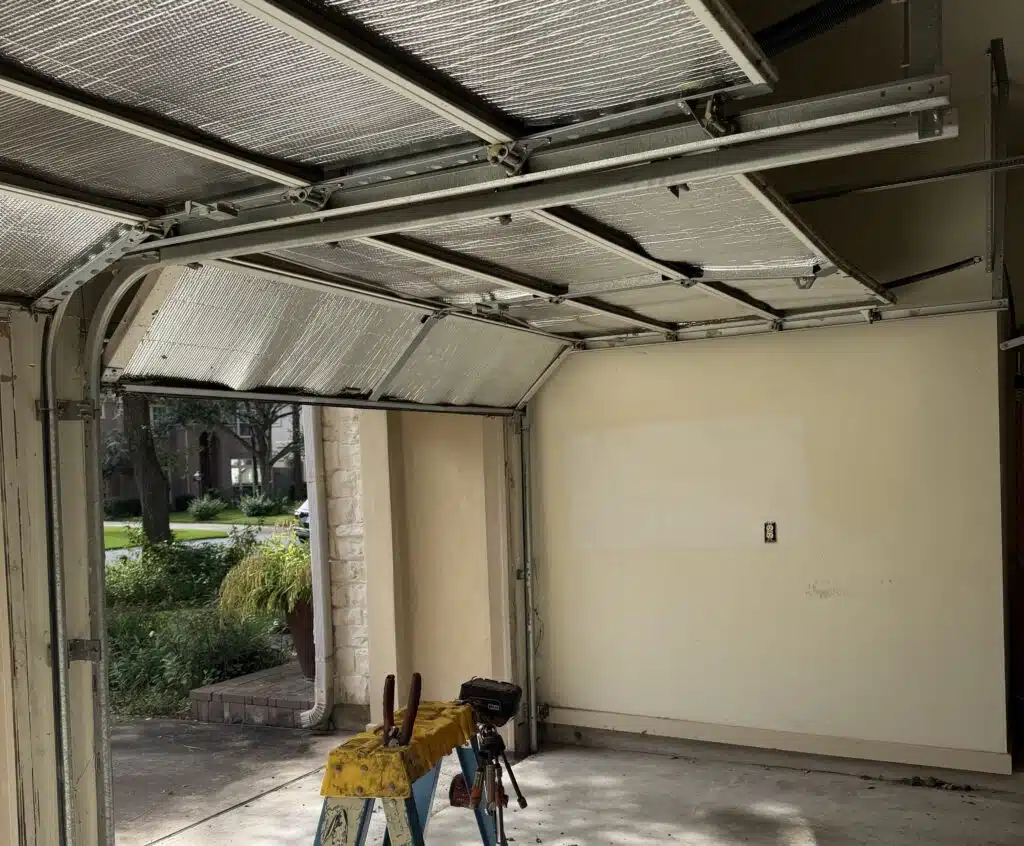
Your garage door is two systems joined by one connection. The opener is an electrical unit running off a household circuit. The door is a mechanical assembly of springs, cables, rollers, and tracks. The trolley on the opener rail links the two, and a storm can take out any of the three.
Find Your Cause With the Hand Test
Before you touch the release cord. Only pull the emergency release cord when the door is fully closed. If the door stopped partway or is standing open, leave the cord alone and call a technician. A broken spring may be the reason it stopped, and releasing the door in that state can drop it.
Check the lock first. If the opener hums or runs but the door stays still, make sure the manual slide lock on the door is open. Many families lock the door by hand during an outage and forget it once the power is back.
The hand test. With the door fully closed, pull the release cord and lift the door a few inches by hand.
- It lifts smoothly with little effort. The door is doing its job, and the fault is on the opener side: power, wiring, electronics, settings, or sensors.
- It will not budge, feels very heavy, binds, or grinds. The door has a mechanical failure. Lower it, leave the opener unplugged, and call for repair.
Find your symptom in the left column and read the cause it points to.
| What you see | Cause |
| The whole house has no power | Power outage |
| House has power, opener has no lights or sound | Tripped breaker or GFCI outlet |
| Outlet has power, opener shows no lights, sound, or response | Surge damaged logic board |
| Opener hums for about 30 seconds, door doesn’t move | Door released by hand and not reconnected |
| Opener hums briefly, door doesn’t move | Manual door lock engaged, or a broken spring |
| Door rises a few inches, then stops or reverses | Broken spring or binding door |
| A loud bang, then the door feels very heavy by hand | Broken spring |
| Door won’t close, sensor light is off or blinking | Misaligned, dirty, or wet safety sensors |
| Door reverses right as it touches the floor | Close limit out of adjustment or debris on the threshold |
| Door stops before reaching the floor | Travel limit or force setting out of adjustment |
| Wall button works, remotes don’t | Lock feature on at the wall control, dead remote battery, or surge damage to the receiver |
| Door opens or closes on its own | Water in the wall button wiring, or surge damage to the logic board |
| Garage took water, faults come and go | Water in the sensors, wiring, or opener |
| Door hangs crooked or uneven | Broken cable or bent track |
| Door is off its tracks or panels are bowed | Wind or debris damage |
| Wood door binds after rain, works when dry | Swollen wood |
| Burning smell or melted plastic at the opener | Electrical damage. Unplug it now. |
Each cause below gives you what happened and the fix, in the order our technicians work through them on site.
1. The Power Is Out, or the Opener Did Not Restart When It Came Back
The cause. Outages are a regular part of storm season here. Texas had 210 major weather-related power outages from 2000 to 2023, more than any other state. The less obvious problem comes after: the house has power again, but the opener stays dark.
The fix.
- While the power is out: with the door fully closed, pull the release cord and lift the door by hand. Our guide to opening a garage door without power walks through it.
- Keep it secure: a disconnected door is no longer locked by the opener, so use the slide lock or keep it closed when you leave.
- Unplug the opener until power is stable, so the surge that comes with restoration never reaches it.
- When power returns: open the slide lock, plug the opener back in, and run it once. On most models, the trolley reconnects on that cycle.
- Still dark while the house has power? Check the breaker and the GFCI outlet next.
A battery backup keeps the door running through short outages, but it won’t last through a multiday one, and heat in a closed garage shortens its life. LiftMaster recommends testing the backup battery once a year and replacing it when it no longer holds a charge.
2. The Breaker or the GFCI Outlet Tripped
The cause. Storm surges and voltage dips trip breakers and GFCI outlets. That’s the protection doing its job, but a tripped GFCI looks exactly like a dead opener. In Houston, heavy rain and wind-driven water add a second cause: moisture in an outlet trips it too.
Before you reset anything: if water reached the garage floor, the outlets, or the opener, leave the breaker and the GFCI alone and call an electrician. A GFCI that trips after a flood is protecting you from a shock.
The fix. If the garage stayed dry, work through these checks in order.
- Reset the breaker. A tripped breaker sits between on and off. Push it fully off, wait 30 seconds, then switch it back on.
- Find the right GFCI. The opener outlet is often protected by a GFCI somewhere else: another garage outlet, an outdoor outlet, or a bathroom. Press reset on each one, then test the opener outlet with a lamp or phone charger.
- Reset the opener. Unplug it for 15 minutes, then plug it back in. If it has a battery backup, disconnect that too, or the unit stays powered and the reset does nothing. Our guide on how to reset a garage door opener covers each brand.
- Rule out the outlet. As a quick test only, plug the opener into a working outlet with an extension cord. If it runs, the outlet is the problem, not the opener.
3. The Door Was Released or Locked by Hand During the Outage
The cause. This isn’t storm damage. It’s what happens after an outage. To get the car out or keep the house secure, someone pulled the release cord, slid the manual lock shut, or both, and nothing was reset when the power came back. The opener and the door are fine, but the opener is either running without the door attached or pushing against a locked door. After a multiday outage, when the door may have been worked by hand for days, this is the first thing to rule out.
The fix.
- Opener hums briefly, then stops: the manual lock is likely engaged. Slide it open and run the opener again.
- Opener hums for about 30 seconds, or the trolley travels while the door stays put: the door isn’t connected. Close the door fully by hand, then run the opener once. On most models, the trolley latches back on as it travels, and you’ll hear a click.
- Still not connected? Some openers need the release handle pulled in a set direction to reset. Check the arrow printed on the trolley or your opener’s manual, since the direction differs by brand.
- Lock open, trolley connected, and it still hums briefly? Run the hand test. A door that feels very heavy has a broken spring, so leave the opener unplugged and call a technician.
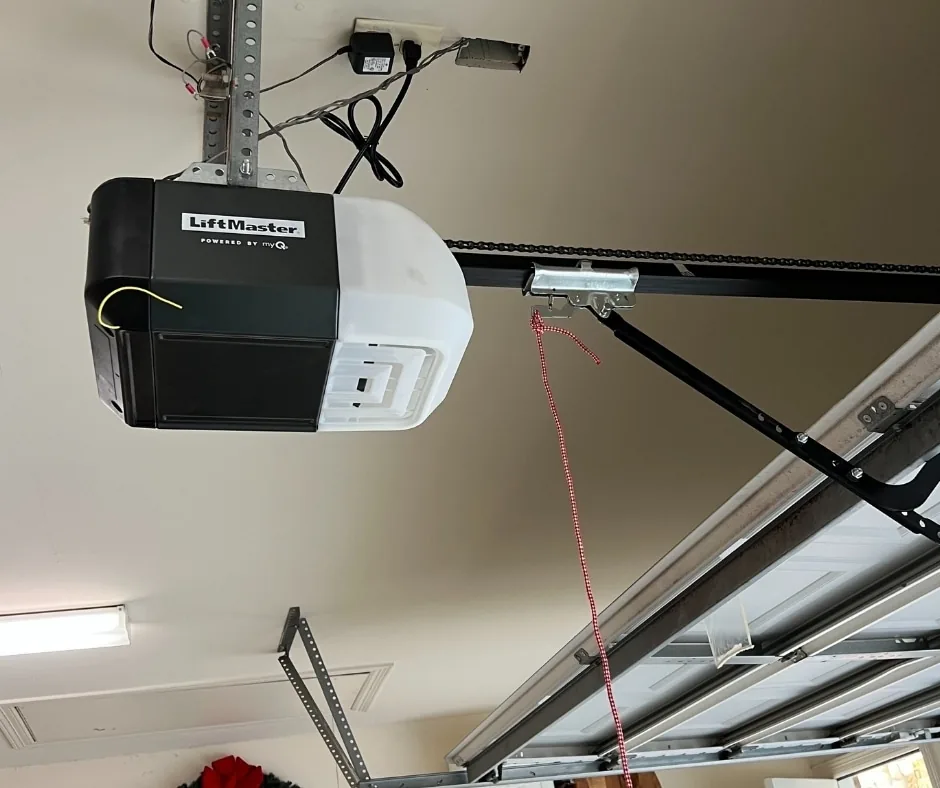
4. A Surge Damaged the Opener’s Logic Board
The cause. The logic board is the circuit board that reads remote signals, stores the travel limits, and watches the sensors. A voltage spike destroys it, even when the opener isn’t running, and lightning doesn’t need to hit your house: the surge travels through power lines and the ground into the garage circuit. Texas recorded 47 million lightning events in 2025, more than any other state, and the surge when power returns after an outage can do the same damage.
What you’ll notice.
- The outlet has power, but the opener shows no lights, sound, or response
- The wall button works, but the remotes stopped working
- The door opens or closes on its own
- The opener lights blink in a pattern your manual doesn’t list
- A burning smell or melted plastic near the unit. Unplug it now and don’t run it again.
The fix.
- Only the remotes stopped? Check the lock feature on the wall control first, then replace the remote battery. If both are fine, reprogram the remotes. Remotes that won’t hold their programming point to a damaged receiver on the board.
- Board replacement. Logic boards are sealed and get replaced, not repaired. On an opener under ten years old, a new board is usually worth it. Past fifteen years, a new opener makes more sense than keeping an aging motor and gear set alive.
- Diagnosis first. Our garage door opener repair visit confirms whether the board, the wiring, or the wall control failed before anything is replaced.
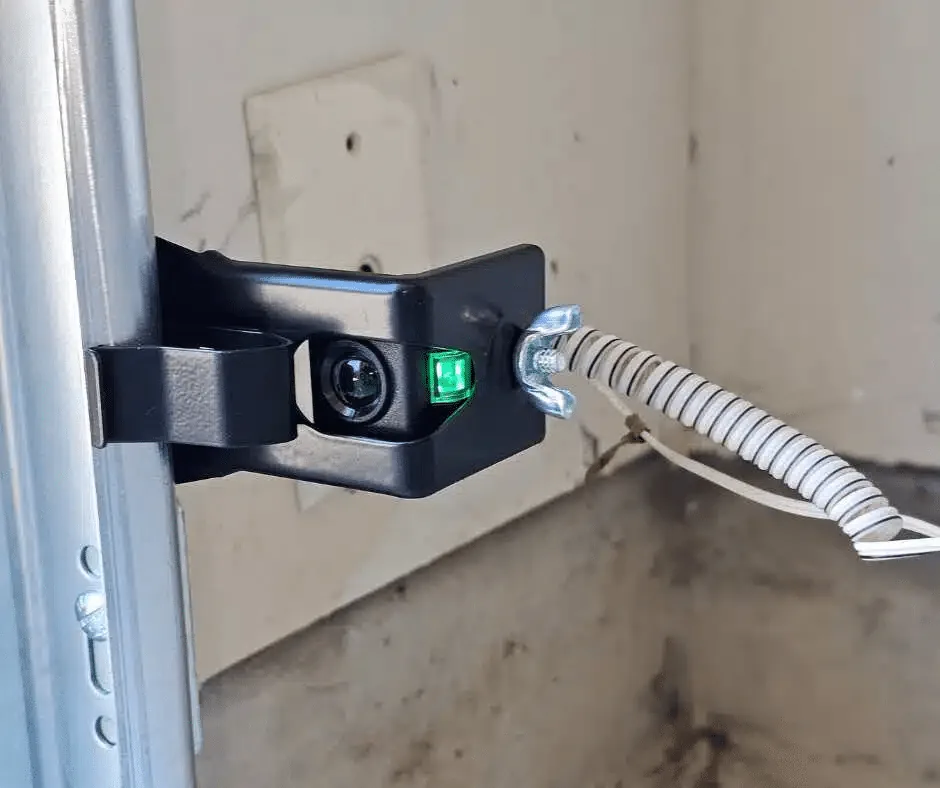
5. Water Reached the Sensors, the Wiring, or the Opener
The cause. Safety sensors mount no higher than six inches off the floor, and their wiring often runs along the baseboard, so water that never looked deep can still reach both. In Houston, the city treats streets as part of the drainage system, built to move water away from homes, and in heavy rain that water can run up the driveway to the garage slab. Rain blown through an open door can also reach the opener’s motor housing.
What you’ll notice.
- Faults come and go: the door works one day and not the next
- The sensor lights flicker or go dark
- Problems start days or weeks after the storm, as moisture corrodes the circuit board
- The door opens or closes on its own after water reached the wall button wiring
The fix.
- Don’t power a wet system. Leave the opener unplugged and the breaker off until the garage is dry and an electrician or technician has checked it.
- Replace, don’t dry. A sensor that works on and off after sitting in water is worse than one that failed outright, because you stop trusting the reversal that protects anyone under the door. Replace the wiring in the same visit.
- Raise what keeps getting wet. If your garage takes water more than once, raised sensor brackets and wiring rerouted higher on the wall cost less than replacing both after every storm.
- Photograph before repairs. Capture the garage and the water line on the wall. Opener warranties cover defects, not storm or water damage, and flood damage falls under a separate flood policy rather than a standard homeowners policy, as the Texas Department of Insurance explains.
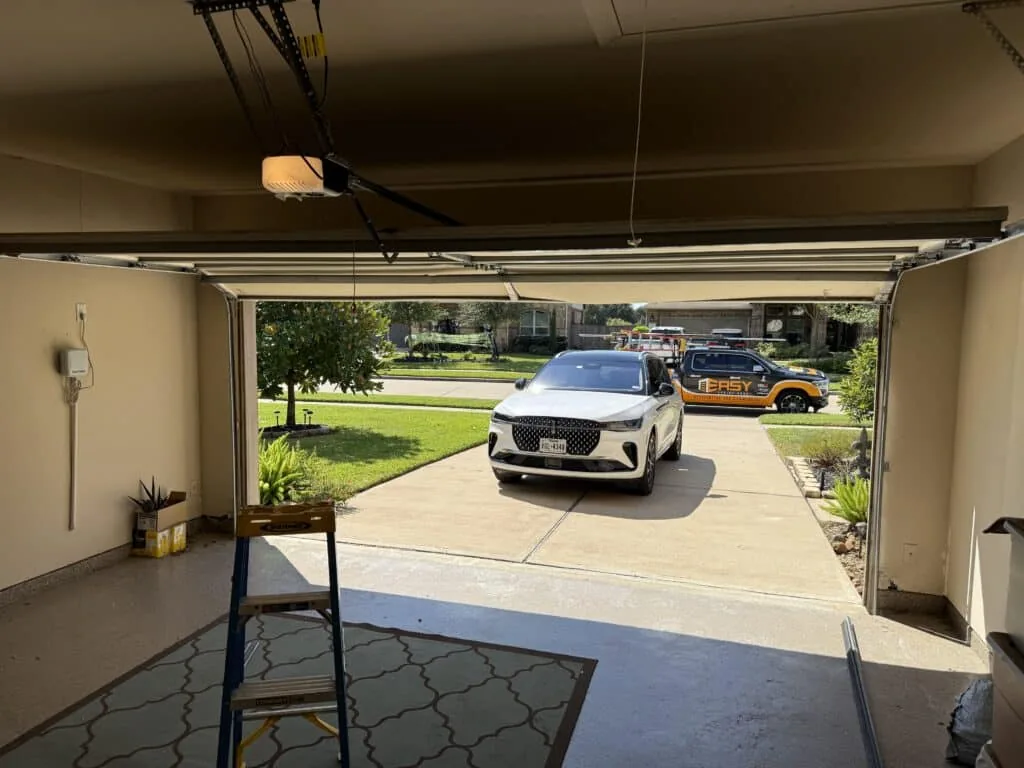
6. The Travel Limits or Force Settings Are Out of Adjustment
The cause. The opener stores where the floor and the top of the opening are (the travel limits) and how hard it may push before it reverses (the force). A storm can shift the door enough that those settings no longer match it, through wind on the panels, a bumped track, or debris on the floor. After heavy rain in Houston, runoff often leaves leaves, mulch, and grit right where the door lands, and the opener reads that as something in the way.
What you’ll notice.
- The door stops a few inches before the floor
- The door reverses right as it touches the floor
- The door stops or reverses partway for no visible reason, and nothing is blocking it
The fix.
- Clear the threshold and wipe both sensor lenses.
- Run the hand test. If the door feels heavy or binds, the problem is mechanical, and adjusting the opener will not fix it.
- Reset the close limit if the door moves freely. The method differs by model, with buttons on newer units and adjustment screws on older ones, so follow your manual.
- Never raise the force to push past a sticking door. The force setting decides how hard the door presses on something before it reverses. Turning it up hides the real problem and makes the door dangerous, so leave force changes to a technician.
7. The Safety Sensors Are Blocked, Dirty, or Misaligned
The cause. The two sensors near the floor on either side of the opening have to see each other. Under federal rules, openers made on or after January 1, 1993 must include entrapment protection, which on most homes means these sensors. Storm debris knocks them out of line, and wind-driven rain splashes mud and grass onto lenses that sit only a few inches above a Houston driveway.
What you’ll notice.
- The door won’t close, or starts down and reverses
- One or both sensor lights are off or blinking
- On older openers, the opener lights flash when you try to close the door. Chamberlain and LiftMaster units made after February 2022 no longer do this.
- Holding the wall button down closes the door, but the remote won’t
The fix.
- Read the indicator lights. A dark or blinking light shows which side has the problem.
- Clean and realign. Wipe both lenses with a dry cloth, point the sensors straight at each other, and retighten the brackets.
- Need the door closed now? Press and hold the wall button until the door is fully down, and watch it the whole way.
- Lights steady but the door still reverses? The close limit is the next thing to check.
- Out of line after every storm? The sensors are mounted on something that moves. Remounting them on solid framing holds the alignment. Our sensor alignment and replacement service handles both.
8. A Spring or a Cable Broke
The cause. Springs wear out by cycle count, not weather, so a storm is often just when the failure lands. Wind pressing on the panels adds load to a spring that was already close to the end. Houston humidity speeds that up by rusting springs and cables, which is why a worn spring so often gives out during storm week.
What you’ll notice.
- A loud bang came from the garage, often mistaken for a gunshot
- The door feels very heavy or won’t lift by hand
- The door rises a few inches, then stops or reverses
- A visible gap in the spring above the door
- The door hangs crooked or uneven, or a cable hangs loose
- The opener hums briefly and stops, even with the manual lock open
The fix. Professional only, and stop using the door.
- Stay clear. A torsion spring holds enough stored energy to break bones or cause eye injury if it releases without control. A broken cable leaves the second one carrying double the load.
- Don’t park under the door while you wait, and don’t keep pressing the button. Running the opener against a broken spring is how a spring repair becomes a door replacement.
- Book the repair. Our technicians handle spring repair and cable replacement on the same visit, and balance the door before they leave.
9. Wind or Debris Damaged the Door, Tracks, or Rollers
The cause. Sustained wind and flying debris move parts that are supposed to stay square. The May 2024 derecho brought winds estimated near 100 mph to downtown Houston, enough to bow panels, bend tracks, and push rollers out of their channels. Standing water does the same job more slowly, rusting the rollers, hinges, and bottom section that sat in it.
What you’ll notice.
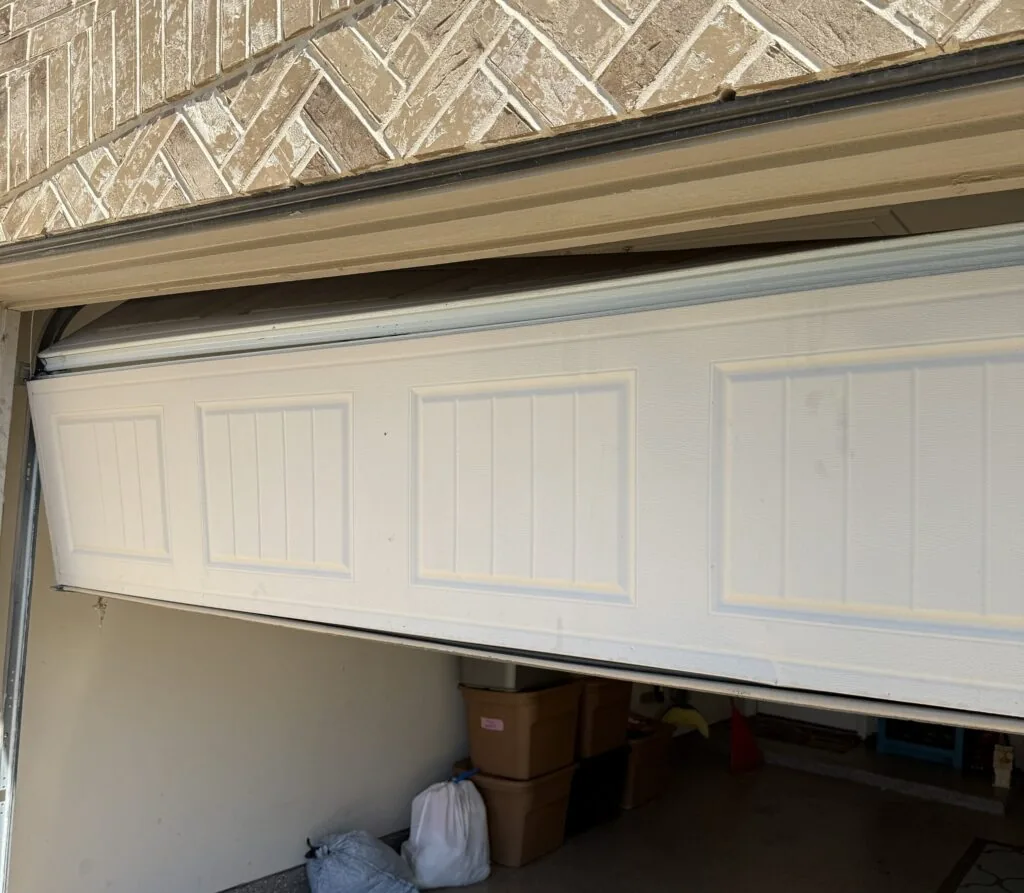
- The door is off its tracks or hangs crooked
- The panels are bowed inward or dented
- A track section is bent, or a roller has popped out of its channel
- The door grinds, scrapes, or binds at the same spot every time
The fix. Professional, and leave the door where it is.
- Don’t force it back. Pushing a misaligned door into its tracks bends panels, snaps cables, and can bring the whole door down.
- Keep people and cars clear until a technician secures it, then realigns the door, replaces bent track, and checks the rollers and cables. See our track adjustment and panel replacement services.
- Call your insurer. Wind and debris damage is often covered under a standard homeowners policy where flood damage is not, according to the Texas Department of Insurance. Check your wind and hail deductible before you file.
10. A Wood Door Swelled and Is Binding in the Tracks
The cause. Wood absorbs moisture and swells, and a swollen section binds against the tracks and jambs instead of moving freely. In Houston humidity, a closed garage can stay damp for days after the rain stops, so a wood door may take longer to shrink back than it would in a drier climate.
What you’ll notice.
- The door moves partway, stops, and the motor strains
- The gaps between sections look tighter than before
- The door works in dry weather but sticks after rain
The fix.
- Get the car out safely. If the door is fully closed, pull the release cord and lift it by hand. If it stuck partway, leave it and call a technician.
- Leave the opener disconnected. Running the motor against a binding door strains the gears and works the springs harder than they were set for. Most swollen doors return to size within a few days.
- Fix the finish. Reseal and repaint every surface, including the top and bottom edges, which are the two most often missed and the two where water gets in fastest. A door that binds again and again needs the tight spots sanded back first.
Why Garage Doors Stop Working After Storms So Often in Houston
Houston gets every storm condition that stops a garage door: outages that last for days, frequent lightning, street flooding, strong wind, and humidity that never fully dries out. Most Houston garages also sit on a slab close to driveway level, which puts the opener circuit, the safety sensors, and the bottom of the door in the path of each one.
Outages that last for days. The May 2024 derecho cut power to more than one million customers across the Houston area. Two months later, Hurricane Beryl left more than 1.7 million still without power days after landfall. Long outages are when doors get released and locked by hand, backup batteries drain in hot garages, and the surge on restoration reaches openers that survived the storm itself.
Lightning. Texas led the country in lightning events in 2025. A strike does not have to hit your house to damage an opener, because the surge travels through power lines and the ground into the garage circuit.
Streets are built to carry water. The City of Houston treats its roadways as part of the drainage system, built to move water away from homes. During heavy rain, that water can run up the driveway and reach the garage slab, where the sensors, their wiring, and the bottom section of the door sit.
Wind. Wide double doors catch the most wind, which bends tracks, pushes rollers out of their channels, and bows panels inward. If a wind-damaged door is replaced in Galveston or Brazoria County, or east of State Highway 146 in La Porte, Pasadena, Seabrook, Shoreacres, or Morgan’s Point, the new door may need a wind-rated product and a WPI-8 certificate from the Texas Department of Insurance. Ask your insurance agent before work starts.
Humidity. Moisture stays in a closed Houston garage long after the rain stops. It rusts springs, hinges, and rollers, and it swells wood doors. A storm often finishes off a part that humidity had already weakened.
Stop Your Garage Door From Failing After the Next Storm
Six habits cover most of the ten causes above.
- Unplug the opener when a severe storm is coming. A surge protector lowers the risk, and unplugging removes it. Close the door first and engage the manual lock, then open the lock again before you plug the opener back in.
- Add a surge protector at the opener outlet. Plug it straight into the outlet, not through an extension cord, and replace it after a major surge or when its protection light goes out.
- Test the battery backup once a year. Unplug the opener and run the door on battery. If it struggles or won’t run, replace the battery before storm season.
- Lubricate after a heavy storm. White lithium grease or silicone spray on the rollers, hinges, and springs pushes out the moisture that starts rust. Skip WD-40, which cleans and displaces water but doesn’t stay on as a lubricant.
- Keep water away from the opening. Clear gutters and downspouts, keep drainage sloping away from the slab, and replace a bottom seal that no longer touches the floor across its full width.
- Have the door checked before hurricane season. Broken springs, bent track, rusted hardware, and a swollen wood door are the expensive end of this list, and each one starts as something a technician would catch. A garage door maintenance visit covers spring tension, cables, track alignment, hardware, and balance. For wind protection, see our guide to hurricane-proofing your garage in Houston.
When to Call a Professional
Start with the hand test. It costs nothing, and it separates a door left released or locked by hand from a broken spring, two problems that are nowhere near each other in urgency or price.
Safe to handle yourself: opening the manual lock, reconnecting the trolley, resetting the breaker and the GFCI outlet in a dry garage, cleaning and realigning the safety sensors, and replacing the remote battery. Most homeowners clear these in a few minutes.
Stop and call a technician when:
- The door will not lift by hand or feels very heavy
- The opener hums briefly and stops, even with the manual lock open
- A cable is loose or the door hangs crooked
- The door is off its tracks or the panels are bowed
- The opener smells burnt, runs on its own, or works only some of the time
- Water reached the sensors, the wiring, or the opener
Running the opener in any of these cases is how a repair turns into a replacement. If the storm caused the damage, photograph the garage before anything is repaired, including any water line on the wall, so your insurance claim has a record.
Call Easy Garage Door Repair at (832) 570-3845 for same-day storm damage repair. A technician finds the cause and gives you the price before any work starts. You can also request a quote online. We serve Houston, Pasadena, Baytown, League City, Pearland, Sugar Land, Katy, Cypress, The Woodlands, Conroe, Spring, Humble, and nearby communities.