







Dirty garage door tracks are one of the most common causes of noisy, jerky, and unreliable door operation. Dirt, dust, spider webs, old lubricant buildup, and debris accumulate inside tracks over time, creating friction that strains your opener motor, accelerates roller wear, and eventually causes the door to bind or come off track entirely.
At Easy Garage Door, we’ve serviced thousands of garage doors across the Houston metropolitan area, where track cleaning is needed more frequently than in most climates. Houston’s combination of year-round humidity, heavy pollen seasons, frequent storms washing debris into garages, and active spider populations makes track maintenance a monthly concern rather than an occasional one. Clean tracks extend the life of your entire door system and prevent the kind of gradual wear that leads to costly repairs.
Handy Checklist for Garage Door Track Cleaning
Most homeowners can complete this full cleaning process in 30 to 45 minutes, including drying time before lubrication.
| Task | What to Use | What to Avoid | How Often |
| Clean track interior | Damp cloth, mild detergent | WD-40, heavy grease, water alone | Every 6 months |
| Remove loose debris | Dry cloth, vacuum | Compressed air (spreads debris) | Monthly |
| Lubricate rollers | Silicone or lithium spray | WD-40, petroleum grease | Every 6 months |
| Lubricate tracks | Nothing | Any lubricant (attracts dirt) | Never |
| Inspect for damage | Visual inspection | Attempting DIY track bending | Every 6 months |
| Check spider webs | Dry cloth or brush | Nothing | Monthly in Houston |
| Post-storm inspection | Visual check | Operating the door before inspecting | After every storm |
Signs Your Garage Door Tracks Need Cleaning
Check this table if your door has started behaving differently. Most of these symptoms point directly to dirty or neglected tracks.
| What You Notice | Likely Cause | Urgency |
| Grinding or squealing during operation | Debris buildup is creating friction in tracks | Medium |
| Door moves unevenly or jerks | Dirt causes uneven roller resistance | Medium |
| Door slower than normal | Track debris or dried lubricant buildup | Low |
| Visible dirt, rust, or grime inside tracks | Long-term buildup from humidity and dust | Medium |
| Spider webs visible near sensors or tracks | Common Houston issue during warm months | Low |
| Door stops mid-travel | Debris blocking roller movement | High |
| Squeaking or clicking sounds | Old lubricant dried and hardened in tracks | Low |
| Rollers are visibly dirty or coated | Grease attracts and accumulates dirt | Medium |
What You Need Before Starting
Tools:
- Dry cloth or microfiber towel
- Damp cloth (separate from dry cloth)
- Old toothbrush or small stiff brush
- Vacuum with brush attachment
- Ladder for upper track sections
Cleaning products that work:
- Mild household detergent mixed with water for stubborn grime
- Automotive brake cleaner for hardened grease buildup
- Silicone-based spray lubricant for rollers and hinges after cleaning
- Lithium-based grease for steel roller bearings
What NOT to use:
WD-40 is the most common mistake homeowners make on garage door tracks. It’s a solvent and degreaser, not a lubricant. It attracts dust and dirt rapidly, making the buildup worse within days of application. Heavy petroleum grease is equally problematic, collecting debris and hardening over time into a gummy residue that’s difficult to remove. Neither product belongs anywhere on your garage door track system.
Safety gear:
- Work gloves (tracks have sharp edges)
- Safety glasses (debris falls during cleaning)
Disconnect your garage door opener before starting any cleaning work. Pull the red emergency release cord to disengage the opener from the door. This prevents accidental operation while your hands are near the tracks.

How to Clean Garage Door Tracks: Step-by-Step
Step 1: Secure the door and disconnect the opener
With the opener still connected, close the door fully using your wall switch or remote, giving you access to the entire vertical track section. Once the door is closed, pull the emergency release cord to disconnect it from the opener. Then place a C-clamp or locking pliers on the track just above the bottom roller bracket. This keeps the door from being accidentally raised or shifted while your hands are near the tracks and rollers.
Step 2: Remove loose debris with a dry cloth and vacuum
Wipe the inside of both tracks with a dry cloth, removing loose dirt, dust, and spider webs. Follow with a vacuum and brush attachment reaching into the track channel to pull out any remaining loose debris. In Houston garages, expect significant spider web buildup, especially during spring and summer months. Address this before wet cleaning to prevent turning dry debris into muddy paste.
Step 3: Wipe tracks with a damp cloth
Dampen a cloth with water and mild dish detergent. Wipe the inside surfaces of both tracks, working from top to bottom. The cloth picks up dirt film and light grime that dry wiping leaves behind. Rinse the cloth regularly to avoid spreading dirt rather than removing it. Pay extra attention to the bottom sections of vertical tracks where debris and old lubricant concentrate most heavily.
Step 4: Scrub stubborn grime and hardened grease
For hardened grease buildup or stubborn grime that won’t wipe away, use an old toothbrush or small stiff brush with mild detergent. Scrub in short strokes along the track channel, loosening compacted material. Automotive brake cleaner applied to a cloth (not sprayed directly into the track) dissolves hardened petroleum grease effectively. This step is often necessary on older Houston homes where tracks haven’t been cleaned in several years.
Step 5: Dry tracks completely
Wipe both tracks thoroughly with a dry cloth, removing all moisture. Leaving moisture in metal tracks accelerates rust formation, a significant concern in Houston’s high-humidity environment (70 to 90 percent year-round). Don’t skip this step even if tracks appear dry after wiping. Run the dry cloth through the track channel twice on each side.
Step 6: Inspect tracks during cleaning
Use the cleaning process as an inspection opportunity. Look for visible dents or bends in the track metal. Check that track mounting brackets are secure against the wall with no loose bolts. Verify the track is straight with no gaps between the rollers and the track channel. Look for rust spots that may need treatment. Note any issues for professional attention rather than attempting to straighten or reshape tracks yourself.
Step 7: Lubricate rollers and hinges (not the tracks)
After tracks are clean and dry, apply silicone-based spray lubricant to roller bearings and hinges. Hold the spray nozzle directly at the bearing point of each roller and apply a short burst. Do the same at each hinge where panels connect. Wipe away excess lubricant immediately to prevent drips that attract dirt.
Do not apply any lubricant to the inside of the track channel itself. Lubricated tracks attract and trap dirt far faster than clean, dry tracks. The rollers need lubrication. The tracks do not.
Steel Rollers vs Nylon Rollers: Different Cleaning Approach
Your rollers need different care depending on their material. Check which type you have before cleaning.
| Feature | Steel Rollers | Nylon Rollers |
| Appearance | Shiny metal wheel, visible ball bearings | Dark plastic or nylon wheel, enclosed bearings |
| Cleaning method | Scrub with a toothbrush, wipe clean | Wipe with a damp cloth only |
| Lubrication needed | Yes, lithium grease on bearings | No, sealed bearings require nothing |
| Noise level | Louder during operation | Quieter |
| Lifespan in Houston | 5 to 7 years (heat and humidity accelerate wear) | 10 to 15 years |
| Rust risk | High if paint or coating is damaged | None |
| Recommended for Houston | Acceptable, but requires more maintenance | Preferred for the Houston climate |
Cleaning steel rollers: Use an old toothbrush to scrub away grease and grime from the roller wheel and bearing area. Wipe clean with a dry cloth. Apply a small amount of lithium-based grease to the bearing points. Check for wobbling (roller should spin freely and smoothly with no side-to-side movement). Replace wobbly or cracked rollers immediately.
Cleaning nylon rollers: Wipe with a damp cloth, removing surface dirt. Do not apply any lubricant to nylon rollers, as they have sealed bearings requiring nothing. Check that rollers spin freely with no grinding or resistance. Nylon rollers showing cracks, flat spots, or damaged edges need replacement regardless of how clean they are.
What NOT to Do When Cleaning Tracks
A few common mistakes cause more damage than dirty tracks would have on their own.
Never use WD-40 or heavy grease on tracks, as noted above. Both attract dirt rather than reducing it, and the resulting buildup is harder to remove than the original grime.
Never apply heavy grease to tracks. Grease collects dust and debris, creating a thick compound that eventually hardens inside the track channel. Removing hardened grease is far more difficult than cleaning standard dirt buildup.
Never leave moisture inside tracks. Water accelerates rust on metal tracks and roller stems. Houston’s humidity makes this particularly damaging. Always dry tracks completely after wet cleaning.
Never attempt to bend or reshape tracks yourself. Bent tracks feel like a simple fix with a hammer or pliers, but improper reshaping creates new problems. Track geometry requires precision. DIY bending usually makes alignment worse and can crack the metal. Call a professional for any bent track sections.
Never spray lubricant directly into the track channel. Even appropriate lubricants like silicone spray don’t belong inside the track. Apply lubricant only to roller bearings and hinge points using a targeted application.
How Often to Clean Garage Door Tracks in Houston
Houston’s climate requires more frequent track attention than most regions. Here’s a practical maintenance schedule:
Monthly (5 minutes): Wipe visible spider webs from tracks, sensors, and rollers. Check for obvious debris inside track channels. Houston garages accumulate spider webs faster than in almost any other region, especially from March through October. A quick monthly wipe prevents webs from trapping moisture and debris against metal surfaces.
Every 6 months (full cleaning): Complete the full 7-step cleaning process above. Lubricate rollers and hinges. Inspect brackets and hardware. This twice-yearly schedule aligns well with Houston’s seasons. Complete one cleaning before summer heat peaks (April or May) and one before the cooler winter months (October or November).
After severe weather (within 24 hours): Inspect tracks for debris washed in during heavy rain, leaves from high winds, and any physical damage from storm debris impact. Houston’s frequent tropical storms and severe thunderstorms regularly deposit material inside garages. Operating a door with storm debris in the tracks causes immediate damage to rollers and track surfaces.
Pollen season (March through May): Houston’s heavy pollen season coats every surface in garages, including tracks. Pollen buildup combines with humidity, creating a sticky film inside tracks. Add a brief track wipe-down to your routine during peak pollen months.
Annual garage door maintenance from a professional includes comprehensive track cleaning, roller inspection, and full system lubrication as part of a complete tune-up.
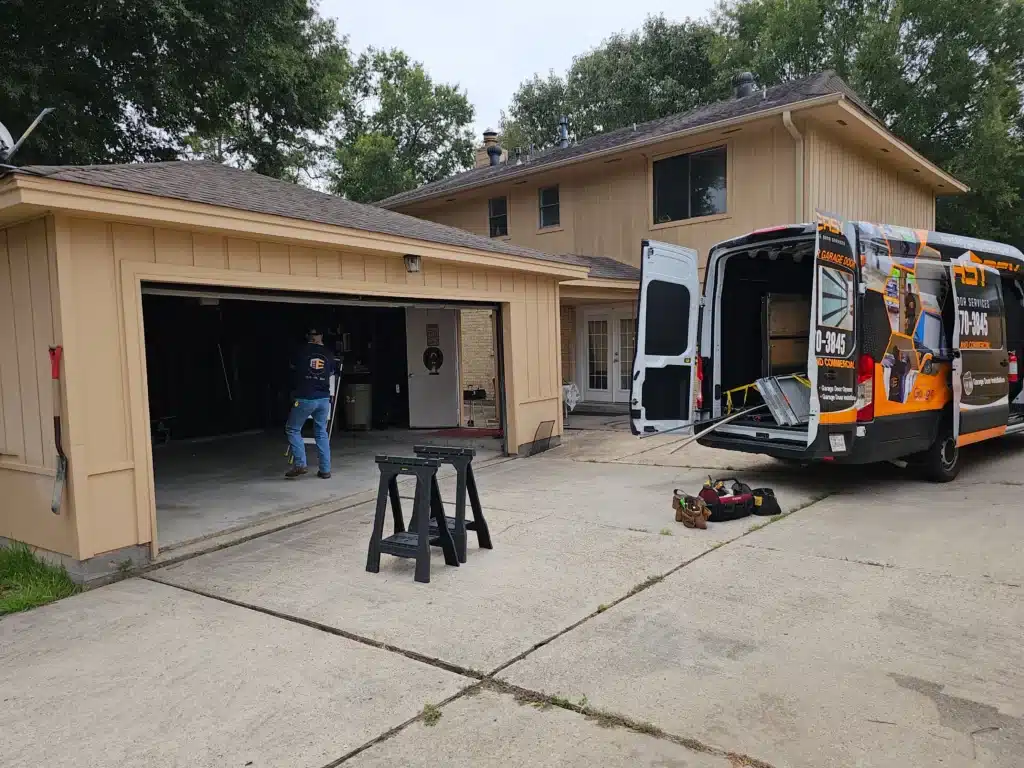
When to Call a Professional
Some track conditions go beyond what cleaning can address. Contact a professional when:
- Tracks show visible bends, dents, or warping that affect door travel
- Rust penetrates beyond the surface into the track metal
- Rollers won’t spin freely after cleaning and replacement
- The door continues making grinding sounds after thorough cleaning and lubrication
- Track mounting brackets are cracked or pulling away from the wall
- The door came completely off the track at any point
Attempting to straighten bent tracks or reattach a door that came off track without professional tools creates safety risks and typically worsens alignment. Our technicians at Easy Garage Door handle track repair, roller replacement, and full system cleaning across Houston. Contact us for professional track service throughout Houston, League City, Sugar Land, Katy, The Woodlands, Pearland, Conroe, Cypress, Spring, and Humble.
Frequently Asked Questions
Can dirty tracks cause my garage door opener to fail prematurely?
Yes. Dirty tracks increase friction, requiring the opener motor to work significantly harder on every cycle, even though a properly balanced door should require only light lifting force. This sustained overwork heats the motor, wears gears faster, and shortens motor lifespan by years. Keeping tracks clean is one of the most cost-effective ways to protect your garage door opener from premature failure.
How do I know if my rollers need replacement rather than just cleaning?
Rollers need replacement rather than cleaning when they show cracked or chipped wheels, wobble from side to side when spun (indicating failed bearings), flat spots on the wheel surface from sliding rather than rolling, or severe rust on steel roller stems that cleaning doesn’t remove. Nylon rollers showing any cracking should be replaced immediately, as cracks propagate quickly under load. Most rollers last 5 to 15 years, depending on material and Houston’s heat and humidity conditions.
Is it safe to clean garage door tracks myself?
Cleaning the track interior and wiping rollers are safe for most homeowners using basic precautions. Disconnect the opener, secure the door with a C-clamp before working, wear gloves and safety glasses, and never place hands near rollers while the door is unsecured. The safe boundary ends at cleaning. Any adjustment to track position, bracket mounting, or roller replacement on doors with torsion springs requires professional service due to spring tension risks.
Does track cleaning help with a noisy garage door?
Track cleaning resolves noise caused by debris friction, dried lubricant, and dirty rollers, which account for the majority of garage door noise complaints. If noise persists after thorough cleaning and lubrication, the source is likely worn rollers needing replacement, loose hardware vibrating during operation, worn hinges, or spring tension issues rather than track dirt. A complete cleaning test helps isolate whether noise is track-related before investing in other repairs.
Can I use household cleaning products on garage door tracks?
Mild dish detergent mixed with water works well for general track cleaning. Avoid harsh chemicals, including bleach, ammonia-based cleaners, and strong degreasers that can damage track coatings and accelerate rust. Automotive brake cleaner applied sparingly to a cloth is effective for hardened grease, but should never be sprayed directly into the track channel.


